Overview
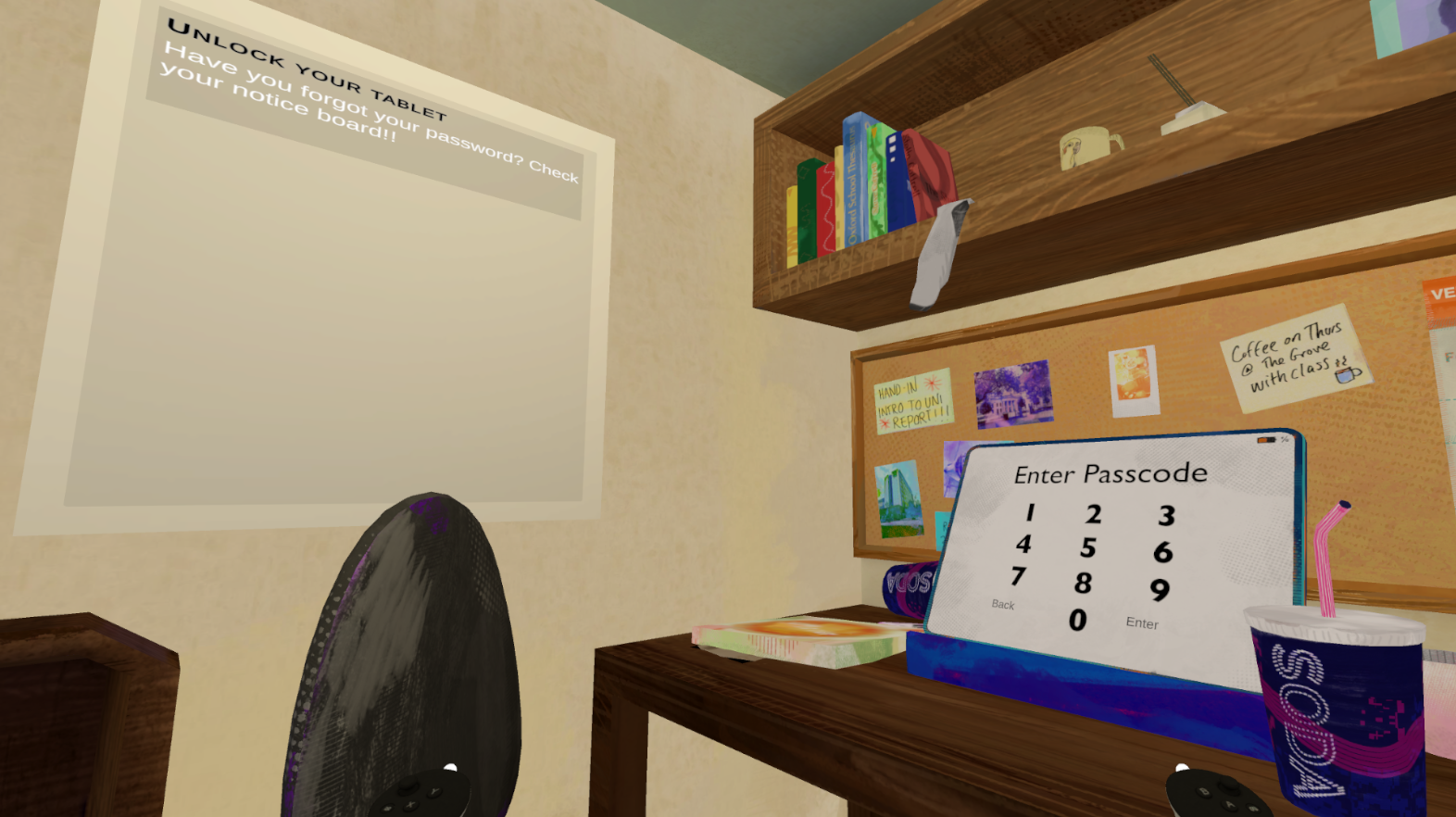
Developed for Manchester Metropolitan University, this VR escape room prototype reimagines the student onboarding experience. Players step into the shoes of a disorganized student in a messy dorm room and must solve puzzles to complete everyday academic tasks. The game interactively teaches new students how to use the SafeZone app, navigate Moodle for assignments, and apply the Cornell Notes method, all while finding citations, unlocking a tablet, and organizing their virtual space.
Core Systems & Contributions
Advanced XR Engineering & Rendering
- Meta XR Integration: Customized the Meta XR Interaction SDK to support seamless transitions between Distance Grab and Ray Interactions using prioritized Interactor Groups.
- VR-Safe Visual Feedback: Engineered custom Single Pass Instanced (SPI) shaders for URP using View Space mathematics. Successfully resolved complex stereo-rendering bugs (right-eye offset) to provide flawless, performant object outlines during player interactions.
- Ergonomic VR UI: Developed a custom “Lazy Follow” World Space UI system for the player HUD, ensuring educational text and objectives remain readable within the field of view without inducing VR motion sickness.
Gameplay Mechanics & Audio
- Dynamic Puzzles: Programmed physics-based mini-games, including a chaotic “Bubble Word” puzzle with impulse-force spawning. Built scalable object-status controllers that dynamically adjust 3D TextMeshPro text to fit physical bounds and broadcast win/loss conditions.
- Spatial Audio Architecture: Designed a decoupled, global
SoundManagerutilizing the Singleton pattern. Implemented systems for looping layered ambience and spawned dynamic 3D spatial audio specifically tied to physical interactions, such as sorting items into bins.
Leadership & Team Integration
Technical Leadership & Workflow
- Pipeline Integration: Spearheaded the integration process across the entire team (artists, designers, and a second developer). Established strict version control and scene-management workflows that eliminated merge conflicts and drastically accelerated project assembly.
- Rapid VR Mastery: Despite VR being a new development medium, quickly adapted extensive software engineering experience into clean, decoupled C# game architecture, setting stable code patterns for the team.
- Empowering the Art Team: Built editor-friendly custom scripts, such as interactive material swappers and dynamic text scalers, allowing 3D artists to easily hook up models (like ID cards and bins) without needing to touch the codebase or manually fix pivot points.